Franchise Enquiry
Franchise Enquiry
8960571056
A cloud kitchen is basically a restaurant without the dining area. You cook, the delivery apps bring you customers, and your food reaches their doorstep. Since you do not need a prime high street location or fancy interiors, your money goes straight into the kitchen, equipment and marketing.
The catch is that you live and die by online ratings, packaging and app commissions. Pick a focused menu (biryani, rolls, North Indian thalis, healthy bowls) and nail it before expanding.
India runs on chai, and a well-branded tea kiosk near offices, colleges or bus stands can see footfall from early morning till late night. Add a few quick bites like bun maska, samosas, sandwiches or maggi, and your average bill goes up without much extra effort.
Margins on tea are excellent. The real challenge is standing out, because there is a chai stall on almost every corner. A clean setup, consistent taste and a catchy brand identity make all the difference.
Food trucks give you something no fixed shop can: the freedom to move where the crowd is. Office parks at lunch, college gates in the evening, weekend flea markets and events. Many owners start with a second-hand vehicle and invest in a solid kitchen fit-out to keep costs in check.
Keep in mind that you will need RTO clearances and local municipal permissions along with your food licence, and rules differ from city to city. Check these before you buy the vehicle, not after.
If you already bake well, this might be the lowest-risk option on the list. You can start from your own kitchen with a good oven, quality tools and ingredients, then take orders through WhatsApp and Instagram. Birthdays, anniversaries, festivals and corporate gifting keep the demand steady all year.
As orders grow, you can move into a small studio or tie up with local cafés to supply desserts. Your photographs and reviews are your storefront here, so invest time in both.
Students living away from home, working professionals and elderly couples all want one thing: ghar jaisa khana, delivered on time. A tiffin service built on monthly subscriptions gives you predictable income and makes planning your raw material much easier.
The work is daily and steady, so consistency matters more than variety. Start with a limited area so your delivery stays quick, then grow ward by ward.
Health is on everyone's mind, and fresh juices, protein shakes and smoothies fit right into that shift. Gyms, parks, hospitals and busy markets are natural spots for a juice bar. The setup is fairly simple: juicers, blenders, a refrigerator, a clean counter and good branding.
Seasonal fruit prices can swing your margins, and summer will always be busier than winter. Adding hot beverages or healthy snacks can help you balance the colder months.
Street food is where India's heart truly lies. Momos, pani puri, kathi rolls, vada pav and chaat have loyal fans in every city, and the investment needed to get started is small. A hygienic setup and a signature item people come back for can turn a simple stall into a local landmark.
Pick your spot carefully and make sure you have the right vending permissions from your local authority. Hygiene is also a big trust factor now, so gloves, clean water and neat presentation are non-negotiable.
Family recipes for achaar, mathri, laddoos or regional namkeen can become a real brand today. You can sell locally through kirana stores and also online through your own website, Instagram or marketplaces. Festive seasons, especially Diwali, bring huge gifting demand.
This business needs attention to shelf life, packaging, labelling and FSSAI compliance, since packaged food has stricter rules. Once sorted though, it scales well beyond your city.
Birthday parties, kitty parties, housewarmings, pujas and small office events all need food, and many hosts prefer a reliable local caterer over a big hotel. You can start with a small team and rented equipment, then invest in your own utensils and serving setup as orders grow.
Word of mouth drives this business almost entirely. One great event can lead to five more bookings, but one bad experience travels just as quickly.
If starting from scratch feels overwhelming, a fast food franchise might be the most practical food business idea on this list. Instead of building a brand, menu and supply chain on your own, you step into a model that has already been tested across hundreds of outlets. You get a recognised name, trained support, standard recipes and marketing backing from day one.
For first-time investors, this reduces a lot of the guesswork that makes new restaurants struggle in their first year. The key is choosing a brand that fits your budget, offers clear terms and has a real track record. We talk about one such option in detail below.
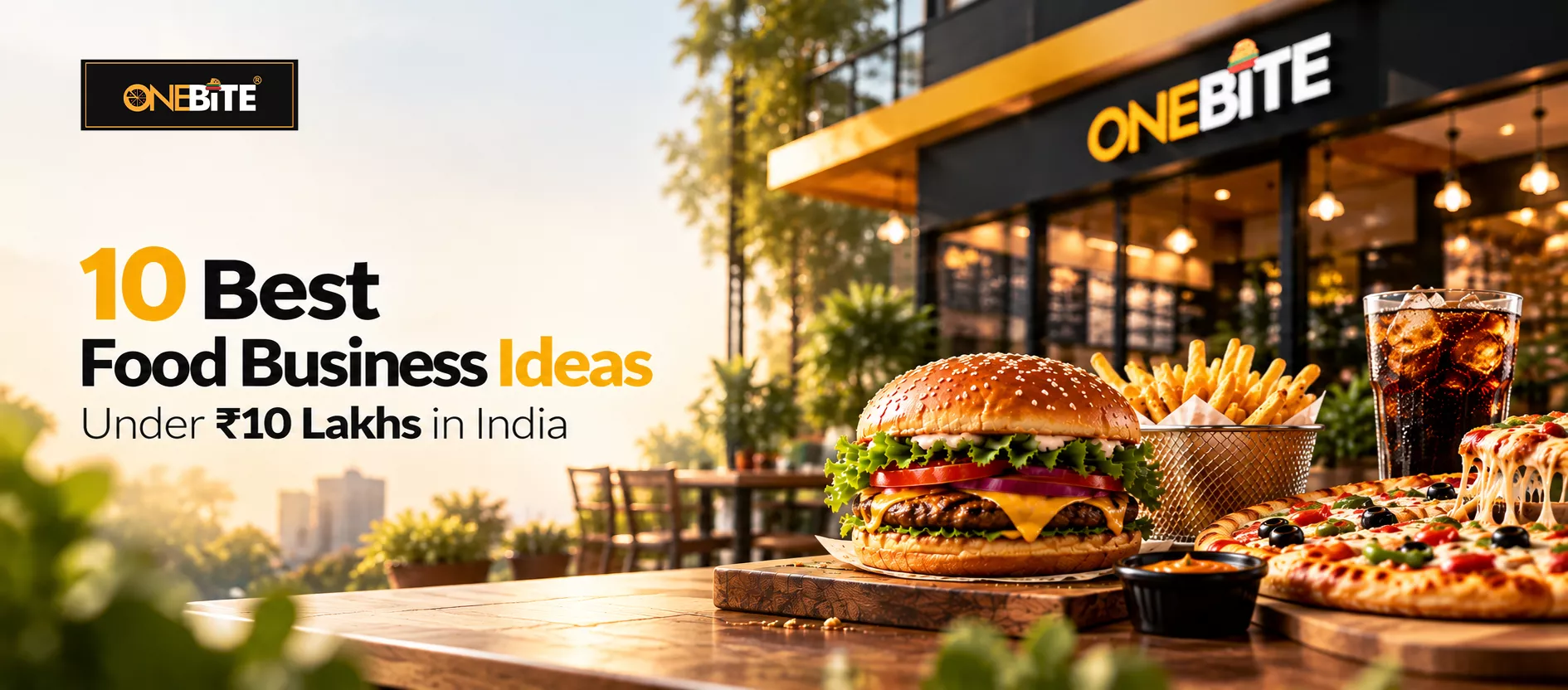
One Bite started in 2019 in Delhi and has grown into one of India's fastest expanding fast food franchise brands, with more than 400 outlets across 27 states and around 250 cities and towns. Its menu is what keeps customers walking in. With over 125 varieties including burgers, pizzas, wraps, sandwiches, pasta, waffles, cheesy loaves, potato tornado, rice bowls, salads, desserts and beverages, there is something for college students, families and office crowds alike. And with burgers starting at ₹31 and pizzas at ₹61, the pricing works just as well in a small town as it does in a metro.
Here is what the One Bite franchise model looks like:
Ready to take your first bite into business? Call or WhatsApp the One Bite franchise team at +91 8960571056, write to sales@onebite.co.in, or visit the head office at Okhla Phase 1, New Delhi. Share your name and city, and the team will check availability in your area and send you the brochure, menu and ROI details.
Take your first step towards a profitable food franchise business.
Your franchise enquiry has been successfully submitted. Our team will get in touch with you shortly.